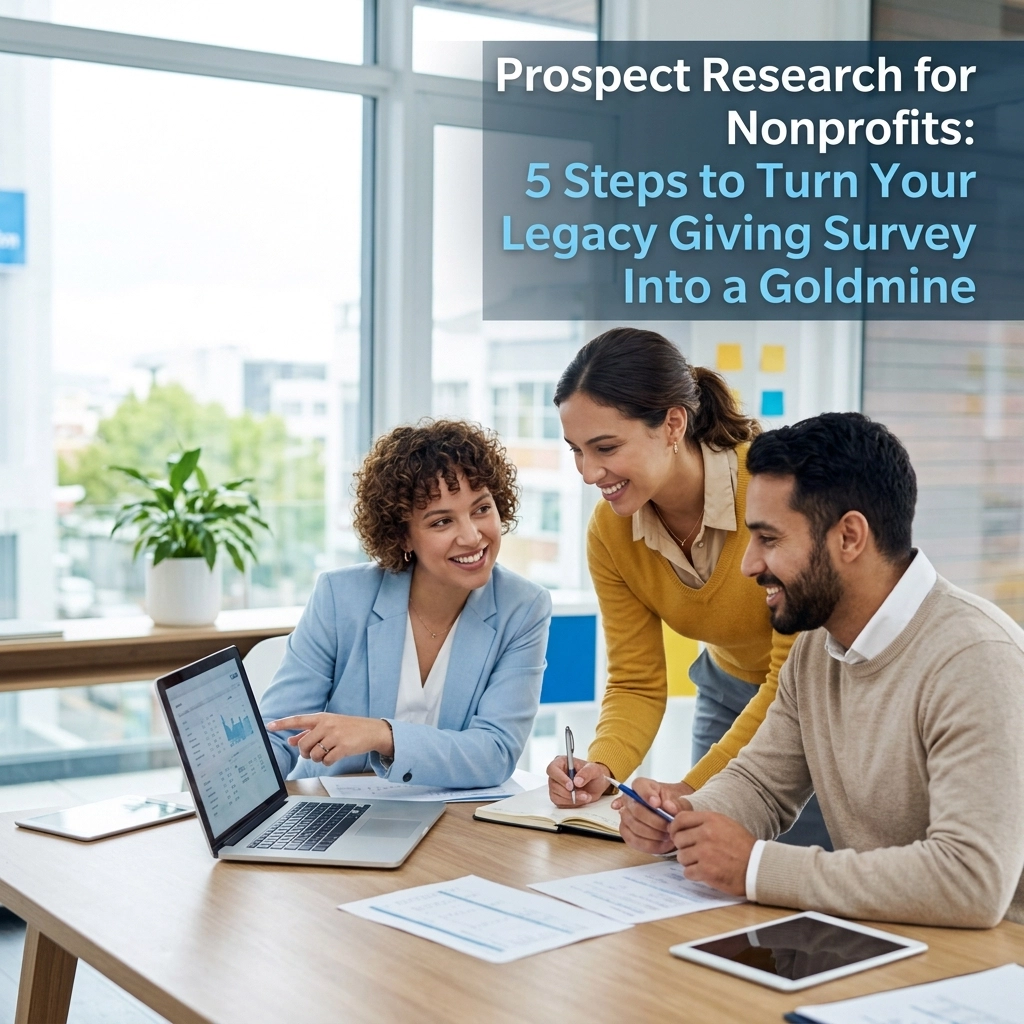
Prospect Research for Nonprofits: 5 Steps to Turn Your Legacy Giving Survey Into a Goldmine
So, you’ve finally done it. You sent out that big legacy giving survey. The responses are trickling into your inbox, and your team is feeling pretty good about the engagement. But now comes the part that keeps most development directors up at night: What on earth do we do with all this data?
If you’re like most nonprofits, those survey results usually end up in a spreadsheet graveyard. You might follow up with the five people who explicitly said, "Yes, I’ve already put you in my will," but the hundreds of people who checked "Maybe" or "I’d like more information" often slip through the cracks.
At Donation Accelerator, we see this all the time. A legacy survey isn't just a feedback tool; it’s a treasure map. If you know how to read it, you can find the "goldmine" of future gifts that will sustain your mission for decades.
Here are five steps to turn your legacy giving survey into a powerhouse for prospect research using a mix of human connection and high-tech AI.
Step 1: Design for Intent, Not Just "Yes" or "No"
Before we can dig into the data, we have to make sure we’re asking the right questions. Prospect research starts with the survey design itself. If you only ask, "Do you plan to leave a gift?" you’re missing out on the nuance that helps you prioritize your outreach.
To turn your survey into a goldmine, you need to gauge sentiment. Ask questions that reveal why they care. Instead of just "How long have you been a donor?" try "What part of our mission makes you feel most proud to be a supporter?"
When people answer these open-ended questions, they are giving you a peek into their hearts. This is the first layer of prospect research. A donor who writes a paragraph about how your organization saved their local park is a much higher-priority lead than someone who just checks "10+ years."

Step 2: Use AI to Analyze Sentiment (Reading Between the Lines)
Once the results are in, you’re likely staring at a mountain of text. This is where most nonprofit teams get overwhelmed. You don't have time to read 500 long-form answers to find the "hidden gems."
This is exactly where AI-powered fundraising solutions come into play. Modern AI can perform "Sentiment Analysis" on your survey responses. It doesn't just look for keywords; it understands the emotional weight behind the words.
For example, the AI might flag a respondent who used words like "legacy," "family tradition," or "lifelong commitment." These are emotional indicators that the person is thinking about their long-term impact. By categorizing respondents based on the strength of their connection rather than just their gift history, you’re performing a much deeper level of prospect research. You’re finding the people who are emotionally ready to say "yes," even if they haven't said it yet.
Step 3: Layer in Wealth Screening for "Capacity"
Sentiment tells you who wants to give. Wealth screening tells you who can give in a way that significantly moves the needle.
A goldmine survey doesn't exist in a vacuum. You need to take those survey responses and cross-reference them with wealth data. But here’s the trick: don’t just look for the richest people on your list. Some of your wealthiest donors might have zero interest in legacy giving because they have other philanthropic priorities.
The "gold" is found at the intersection of High Affinity (from your survey) and High Capacity (from wealth research).
When you use the Donation Accelerator platform, we help you prioritize these leads. We look for markers like real estate holdings, SEC filings, and previous political giving to help you identify who among your "Maybe" crowd has the assets, like appreciated stock or real estate, that make for perfect legacy gifts.

Step 4: The Fortune is in the "Maybes"
If someone says "No" on a legacy survey, respect that. If they say "Yes," get them to a gift officer immediately. But the real "goldmine" for prospect research is the "Maybe" group.
Statistically, about 20-30% of your survey respondents will fall into this middle ground. They are curious, but they aren't convinced. They might have questions about taxes, they might be worried about their children’s inheritance, or they might just need a little more "why" before they commit.
This is where you can turn a maybe into a major gift.
Instead of sending a generic "Thanks for your interest" email, use the data you’ve gathered to segment them.
- Segment A: High sentiment + High wealth = Immediate personal outreach from the Executive Director.
- Segment B: High sentiment + Moderate wealth = Invite to a legacy society webinar or "behind-the-scenes" event.
- Segment C: Moderate sentiment + High wealth = Targeted mailers focusing on the tax benefits of bequests.
By segmenting your "maybes," you stop wasting time on cold leads and start focusing your energy on the people most likely to convert.
Step 5: Automate the Initial Follow-Up (The Virtual Touch)
The biggest reason legacy surveys fail to produce results is the "Time Gap." If a donor expresses interest on Tuesday and they don't hear from you until three weeks later, the spark is gone.
But we get it: you’re a small team. You can’t call 200 people in 48 hours.
This is where virtual agent call campaigns change the game. You can use AI-driven tools to follow up with survey respondents almost instantly. These aren't "robocalls" from the 90s; these are sophisticated, friendly virtual assistants that can thank the donor for their feedback, answer basic questions about legacy giving, and even schedule a call with a human fundraiser if the donor is ready.
This keeps the momentum going while your team focuses on the top 10% of high-wealth, high-affinity prospects. It ensures that every "gold nugget" in your survey is acknowledged and nurtured.

Putting it All Together: Your Prospect Research Workflow
If you want to turn your next survey into a legacy giving goldmine, your workflow should look something like this:
- Launch the Survey: Focus on emotional connection and intent.
- Run the Analysis: Use AI to score respondents based on sentiment and affinity.
- Append the Data: Use a Donor Relationship Manager to layer in wealth and capacity data.
- Prioritize: Create your "Top 50" list of prospects who have both the heart and the means.
- Engage: Use a mix of personal outreach for the top tier and automated AI follow-ups for the rest.
Prospect research doesn't have to be a mystery. It’s simply the process of listening to what your donors are telling you: both through their words and their data: and then showing up for them in a way that feels personal and meaningful.
Ready to see how AI can transform your fundraising? Check out our virtual agent call campaigns demo and let's start mining that data!
At the end of the day, legacy giving isn't about death; it’s about what lives on. By using the right technology to qualify your leads, you aren't just "asking for money": you're helping your supporters build a bridge to the future of the cause they love most. And that, dear fundraiser, is the biggest goldmine of all.