The Ultimate Guide to SMS Fundraising: Everything You Need to Succeed (Scripts Included!)
Let's talk about the channel that's probably sitting in everyone's pocket right now: text messages. If your nonprofit isn't using SMS fundraising yet, you're missing out on one of the most powerful tools in the digital fundraising toolkit.
Here's a stat that'll blow your mind: SMS messages have a 98% open rate. Yeah, you read that right. Ninety-eight percent. Compare that to email (where you're lucky to crack 20%), and suddenly texting doesn't seem like such a weird way to ask for donations, does it?
The best part? Text messages get click-through rates of about 6.3%, which is more than double what nonprofits typically see with email. When you send a text, people actually read it, and they act on it.
Why SMS Fundraising Actually Works
Think about your own phone habits for a second. When you hear that notification buzz, what do you do? You check it, right? Usually within minutes. That's the magic of SMS fundraising: immediacy.
Unlike emails that sit in an inbox for days (or get buried under promotional clutter), text messages cut through the noise. They're personal, they're direct, and they feel urgent in a way that other channels just don't.
Crafting Messages That Actually Get Donations
Here's where most nonprofits trip up: they try to cram way too much into 160 characters. Your SMS message isn't a novel, it's a conversation starter.
The winning formula looks like this:
- Start with the impact (what you've done or what's at stake)
- Create urgency (time-sensitive goals work wonders)
- Make a clear ask (no beating around the bush)
- Include an easy donation link
- Always add an opt-out option
Ready-to-Use Scripts That Work
Let's get practical. Here are some proven templates you can swipe and customize:
For Regular Campaign Appeals:
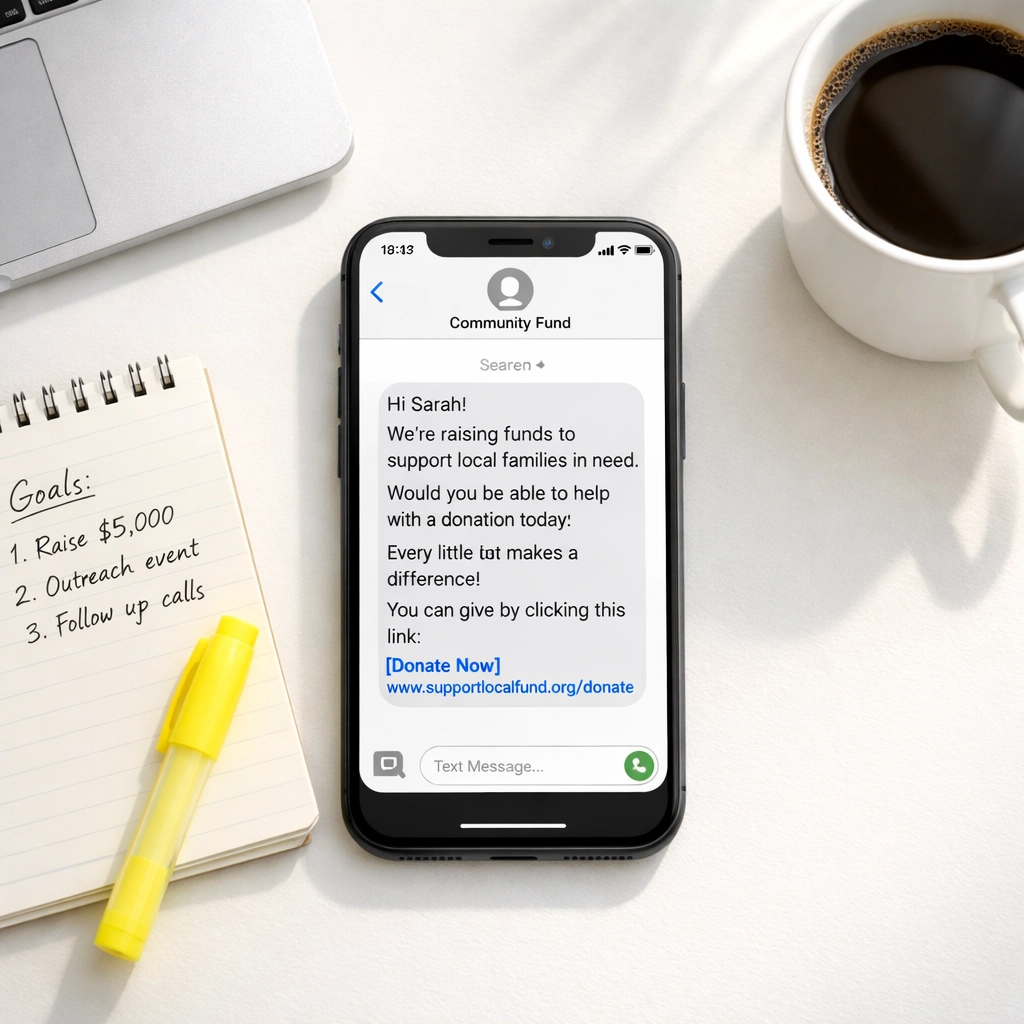
"Your support helped us serve 500 meals last month! We're just $2,000 away from our goal to provide holiday meals for 200 families. Can you help us finish strong? Donate now: [link] Reply STOP to opt out."
For Matching Gift Campaigns:
"Only 12 hours left to DOUBLE your donation! Every dollar matched until midnight. Give now: [link]."
For Post-Event Follow-Ups:
"Thanks for joining tonight's gala! Help us hit our $50K goal by donating here: [link]."
For Converting One-Time Donors to Monthly Givers:
"Your $25 gift made a huge impact! Would you consider making it monthly to help 3 more families every month? [link]."
For Welcoming First-Time Donors:
"Welcome to our mission, John! Your $25 gift will provide school supplies for one child. See the impact: [link]"
The Secret Sauce: Personalization and Segmentation
Here's where things get interesting. Not everyone on your list should get the same message. Someone who's donated five times this year needs a different approach than someone who signed up at last month's event but hasn't given yet.
Smart segmentation means breaking your list into groups based on:
- How much they've given before
- When they last donated
- How they found you
- Their engagement level
- Where they live
Then tailor your ask. A loyal monthly donor might get a message thanking them for their ongoing support and inviting them to increase their gift. A first-time donor gets welcomed into the community with a message that shows them exactly where their money went.
The more personal you make it, the better your response rates. Use names, reference past donations, acknowledge their specific connection to your cause.
Timing Is Everything (Seriously)
Send a text at 3 AM and watch your unsubscribe rate skyrocket. Send it at noon when people are grabbing lunch? Now you're talking.
The sweet spots for SMS fundraising:
- Between 9 AM and 8 PM (respect people's downtime)
- Lunchtime (11:30 AM – 1:30 PM) when folks are taking a break
- Late afternoon (4-6 PM) during the commute home
- Pay attention to time zones, don't wake up your West Coast donors
Strategic dates that work like magic:
- Giving Tuesday (obviously)
- Year-end push (those last few days of December are gold)
- During live events (strike while the iron's hot)
- Matching gift deadlines
- Impact milestone moments

How Often Should You Text? (The Goldilocks Question)
This is where a lot of nonprofits mess up. Text too much, and people hit that STOP button faster than you can say "donor retention." Text too little, and you're leaving money on the table.
The reality? There's no magic number, but here's a good rule of thumb: think quality over quantity. Most successful nonprofits send 2-4 fundraising texts per month during regular times, ramping up slightly during major campaigns.
The key is making sure every text has a purpose. Don't text just to text. If you don't have something valuable, urgent, or important to share, wait until you do.
MMS vs. SMS: Should You Add Images?
Standard SMS messages are text-only and limited to 160 characters. MMS messages let you include photos, videos, GIFs, and up to 5,000 characters.
Should you use MMS? Sometimes, yeah! A photo of the families you've helped or a quick video showing your program in action can boost engagement. Many nonprofits use MMS for about half their fundraising texts, especially during major campaigns.
Just know that MMS costs a bit more to send. Use it strategically for your biggest appeals or when visuals really drive home the impact.
Automation: Work Smarter, Not Harder
Set up automated workflows that do the heavy lifting for you:
- Welcome series for new subscribers
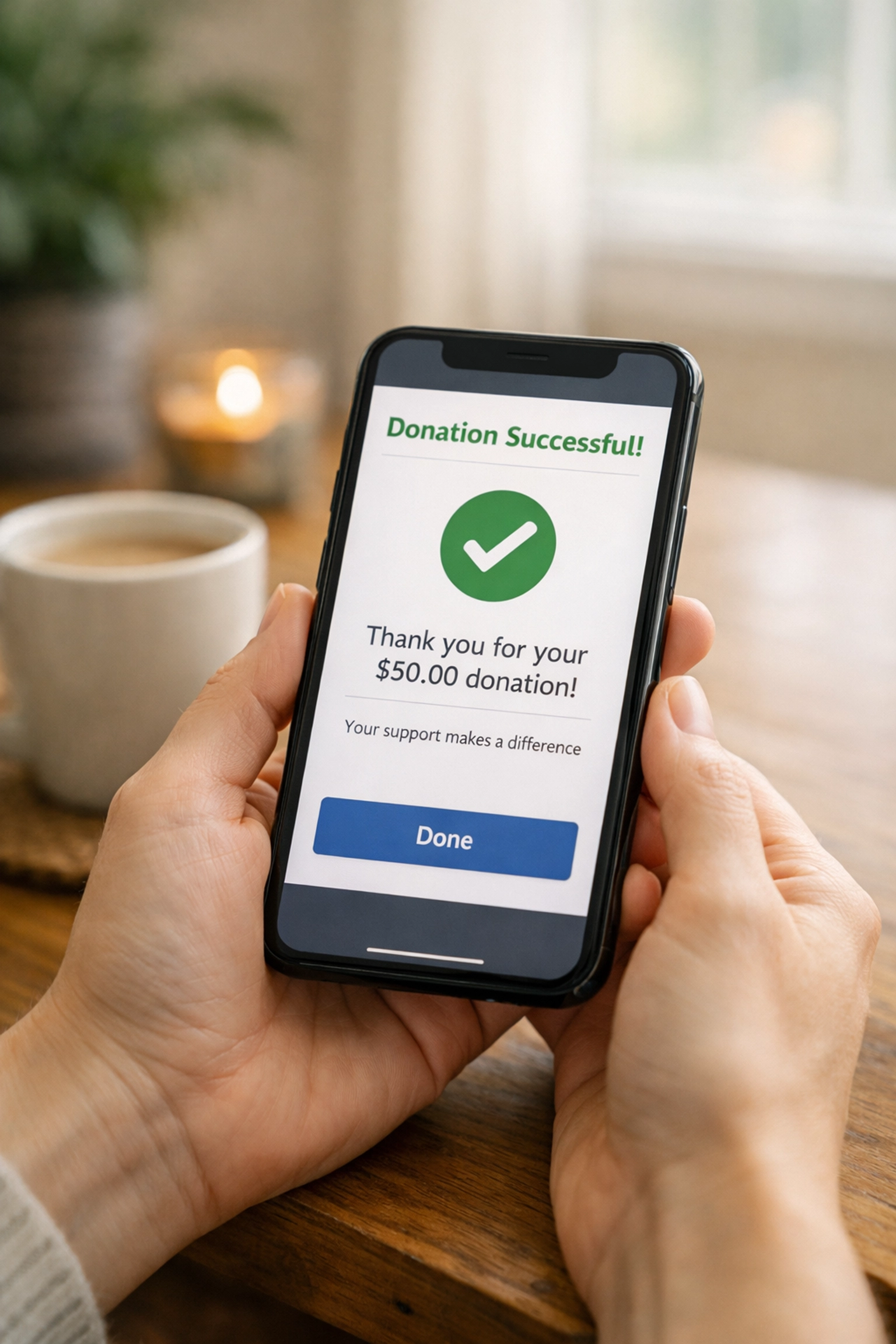
- Thank you texts that go out immediately after a donation
- Reminder texts to people who clicked your link but didn't donate
- Follow-up messages based on past donation behavior
The beauty of automation is that it ensures nobody falls through the cracks. Every donor gets acknowledged, every abandoned donation gets a gentle nudge, and you're not manually sending hundreds of individual messages.

Building Your SMS List the Right Way
You can't just buy a list and start texting people (that's a great way to get fined and lose trust). People need to explicitly opt in to receive texts from you.
Ways to grow your list:
- Add opt-in checkboxes to your donation forms
- Promote your text program on social media
- Include sign-up opportunities at events
- Mention it in your email newsletter
- Create a keyword campaign ("Text HELP to 12345 to join our mission")
Give people a reason to sign up. Maybe it's exclusive updates, early access to event tickets, or insider stories about your impact.
Common Mistakes That Kill SMS Campaigns
Ignoring compliance rules. Follow the regulations. Include opt-out language. Don't text outside appropriate hours. This isn't optional.
Being too vague. "Support our cause!" doesn't cut it. Be specific about what you need and why.
Forgetting to say thank you. Send confirmation texts. Acknowledge gifts promptly. This is basic donor stewardship 101.
Not testing first. Always send test messages before blasting your entire list. Broken links are embarrassing and costly.
Making it hard to donate. Your link should go directly to a mobile-optimized donation page. Every extra click costs you donations.
Getting Started: Your Action Plan
Ready to launch your SMS fundraising program? Here's your roadmap:
- Choose a reputable SMS platform built for nonprofits
- Secure a short code or dedicated number
- Build your subscriber list (start with engaged email subscribers)
- Create your first campaign with a clear, compelling message
- Track your results obsessively: open rates, click rates, conversion rates
- Refine based on what the data tells you
SMS fundraising isn't rocket science, but it does require thoughtfulness. Respect your donors' time and attention, send messages that matter, and always make it easy for people to give.
The nonprofits winning at SMS fundraising aren't necessarily the ones with the biggest budgets: they're the ones who understand that every text is a chance to deepen a relationship and create real impact. Now go send some life-changing text messages.