The Ultimate Guide to Donor Stewardship Automation: Everything You Need to Keep Major Donors Happy
Let's be real: keeping major donors happy is kind of a full-time job. Between thank-you notes, impact reports, anniversary celebrations, and all those "just checking in" touches, it's easy to feel like you're drowning in stewardship tasks. And yet, these same tasks are absolutely critical for building the kind of long-term relationships that keep your nonprofit financially stable.
Here's the good news: donor stewardship automation isn't about replacing that personal touch with cold, robotic messages. It's about freeing up your time so you can focus on the meaningful conversations that actually deepen relationships. Think of it as having a really organized assistant who never forgets a birthday and always sends reminders at the perfect time.
Why Automate Your Donor Stewardship?
First things first, let's talk about why automation makes so much sense for nonprofit fundraising.
You'll never drop the ball again. When stewardship lives in spreadsheets and sticky notes, things slip through the cracks. A major donor's three-year giving anniversary passes unnoticed. A thank-you note goes out two weeks late. These small misses add up, and they send a message you definitely don't want to send: that you're not paying attention.
Automation creates consistency. Your donors get their thank-you emails within hours of giving. They receive impact updates on a predictable schedule. They get those warm "we're thinking of you" touches right when they matter most. And all of this happens whether you're in the office, on vacation, or buried in grant applications.

You can actually scale your stewardship. Here's a math problem that keeps development directors up at night: as your donor base grows, how do you maintain personalized stewardship for everyone? The answer used to be "hire more staff," which isn't exactly budget-friendly for most nonprofits.
Automation solves this elegantly. Once you've set up your workflows, they can handle 100 donors or 10,000 donors with the same level of attention and care. And research backs this up, personalized automated emails are 26% more likely to be opened than generic ones, and donors report feeling 71% more engaged when they receive tailored communications.
Your team gets their time back. Think about how much time your development team spends on routine tasks. Drafting thank-you emails. Scheduling reminders for pledge payments. Pulling lists for anniversary messages. Updating spreadsheets with donor touchpoints. These tasks are important, but they're also repetitive and time-consuming.
When automation handles the routine stuff, your fundraisers can focus on what really matters: having thoughtful conversations with donors, developing deeper relationships, planning strategic stewardship moves, and responding to situations that require human judgment and empathy.
What Should You Actually Automate?
Not everything in donor stewardship should be automated: but a lot of things can be. Here's what works well:
Thank-you messages are the obvious starting point. Set up automated thank-you emails that go out immediately after a donation is received. Make sure they're warm, specific to the giving level, and genuinely grateful. This immediate acknowledgment shows donors you're on top of things and sets a positive tone for the relationship.
Impact updates and reports keep donors connected to your mission. Create automated series that share stories, outcomes, and concrete examples of how donations are making a difference. A recurring donor might receive quarterly impact reports automatically, while a major donor might get monthly updates tailored to their specific interests.
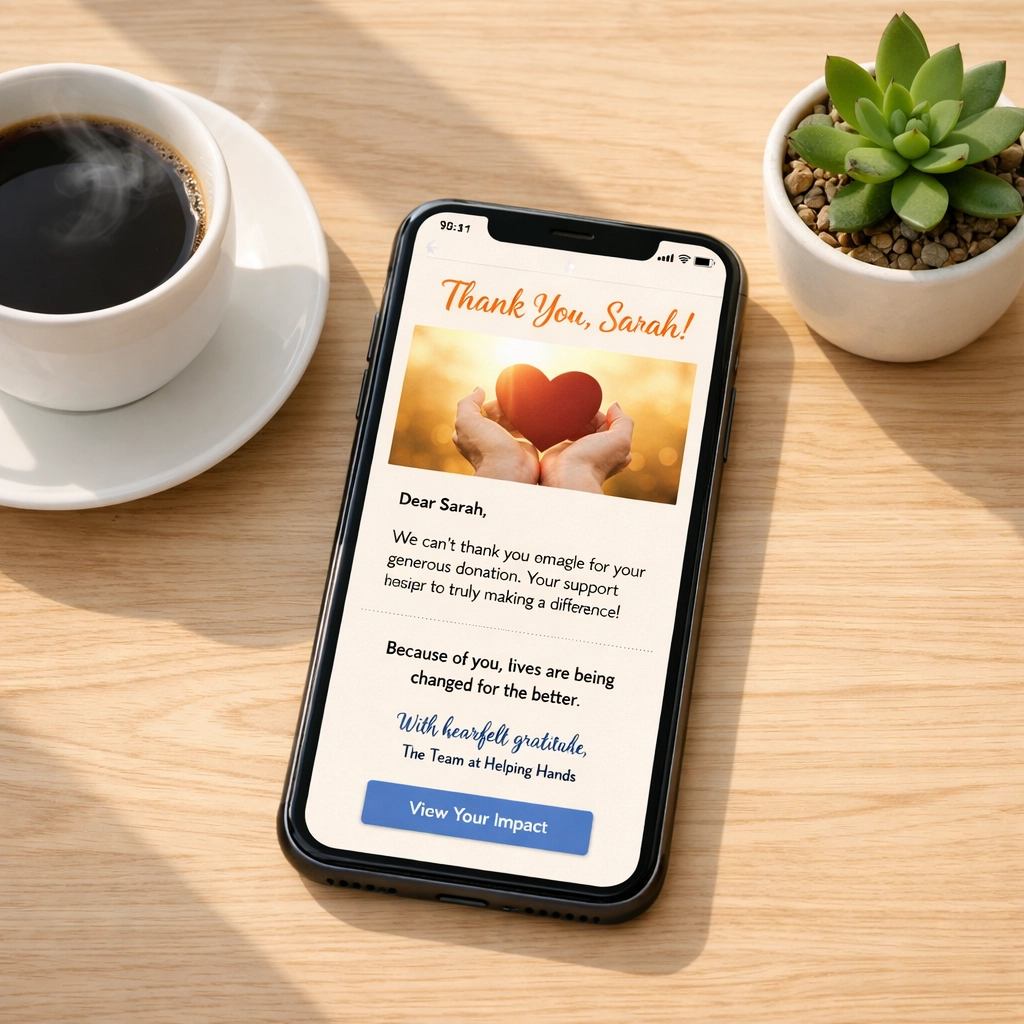
Milestone celebrations are perfect for automation. Set up triggers for giving anniversaries ("You've been supporting us for three years!"), cumulative giving milestones ("Your lifetime support has now reached $10,000!"), and special occasions. These touches make donors feel seen and valued.
Pledge reminders need to be timely but not pushy. Automation can send gentle reminders a few days before a pledge payment is due, along with easy payment links. If a payment is missed, a friendly follow-up can go out automatically while flagging the situation for your team to review.
Event follow-up is another strong candidate. After a donor attends an event, send an automated thank-you with photos, key takeaways, or next steps. Before your next event, automatically invite donors based on their past attendance or giving level.
Behavior-based outreach gets really interesting. When a donor clicks on a particular story in your newsletter, automation can trigger follow-up content on that topic. When someone visits your planned giving page, your major gifts officer can get an automatic alert to reach out personally.
How to Automate Without Sounding Like a Robot
Here's the million-dollar question: how do you use automation while keeping things feeling personal and human? Because let's face it: nobody wants to receive thank-you notes that read like they were written by ChatGPT's boring cousin.
Write like a human, not a corporation. When you're crafting your automated messages, write them the same way you'd write a personal email. Use contractions. Vary your sentence length. Include warmth and personality. If your organization has a casual, friendly voice (like we do!), let that shine through in your automated communications too.
Personalize with real data. Use donor management system fields to reference specific details: the donor's name, their donation amount, what they've supported in the past, how long they've been giving. "Thanks for your $500 gift to our youth programs: you've been championing young people in our community since 2019" feels way more personal than "Thank you for your generous donation."

Segment thoughtfully. Don't send the same message to everyone. Create different communication tracks for different donor types. Major donors should receive different touchpoints than first-time donors. Monthly sustainers need different stewardship than annual fund contributors. The more relevant your automated messages are, the less "automated" they'll feel.
Know when to go manual. This is crucial. Automation should flag scenarios that need human attention, not try to handle them automatically. If a major donor's gift is half what they usually give, that's a signal for personal outreach, not an automated response. If someone's been giving for 10 years, their anniversary deserves a phone call or handwritten note, not just an email template.
Building Long-Term Financial Stability Through Smart Stewardship
Here's why all this matters beyond just keeping donors happy: effective stewardship automation directly impacts your organization's financial sustainability.
When donors feel consistently appreciated and see regular evidence of their impact, they give again. And again. Donor retention rates improve dramatically with proper stewardship: and retaining donors is far more cost-effective than acquiring new ones. Studies show it costs five times more to acquire a new donor than to keep an existing one.
Automated stewardship also creates predictable revenue streams. When monthly donors receive regular impact updates and appreciation, their lifetime value increases. When major donors experience consistent, thoughtful engagement, they're more likely to increase their giving over time and consider legacy gifts.
Plus, automation creates data that helps you improve. You can track which messages get the best response rates, which donor segments are most engaged, and where your stewardship might need adjustment. This data-driven approach helps you make smarter decisions about where to invest your relationship-building energy.
Getting Started: Your First Steps
If you're sold on donor stewardship automation but not sure where to begin, start simple. Choose one workflow to automate: typically, automated thank-you messages are the best place to start. They're high-impact, relatively simple to set up, and immediately free up time for your team.
Once that's running smoothly and you've seen the results (time saved, consistent delivery, positive donor feedback), expand gradually. Add anniversary messages next. Then impact report series. Then pledge reminders. Each new workflow builds on the last, and your team becomes more comfortable with the technology along the way.
Make sure your whole team understands how the automation works and why you're using it. The goal isn't to replace anyone: it's to empower everyone to focus on the relationship-building work that actually requires human connection, judgment, and empathy.
Remember: the best donor stewardship automation doesn't make your organization seem more robotic. It makes you seem more attentive, more organized, and more focused on what really matters: building lasting relationships that change lives and sustain your mission for the long haul.
And honestly? Your donors will thank you for it. (You'll just have more time to thank them back.)