Struggling For Major Donor Leads? 50+ Planned Giving Survey Questions That Actually Work
Let's be honest, finding major donors who are ready to leave a legacy gift feels like searching for a needle in a haystack. You know they're out there, but how do you identify them before your competitor does?
Here's the thing: most nonprofits wait until someone mentions their will in casual conversation. By then, it's often too late to build the relationship that leads to a transformational gift. The secret? Get ahead of the game with strategic planned giving surveys that identify legacy donors before they've even made up their minds.
Why Surveys Are Your Secret Weapon for Major Donor Prospecting
Planned giving surveys aren't just about asking "Will you leave us money when you die?" (please don't do that). They're sophisticated tools that help you understand donor motivations, capacity, and long-term intentions, without being awkward or pushy.
The best part? When done right, surveys actually make donors feel valued and heard. You're showing genuine interest in their values and vision, which is exactly what major donors want to see from organizations they support.

The Golden Rules Before You Start
Before we dive into the questions, let's talk strategy. Your survey should take no more than 5-10 minutes to complete. That's it. Donors are busy people, and respecting their time shows you value the relationship.
Keep most questions closed-ended or multiple choice. Include one, maybe two, open-ended questions max. And here's a pro tip: always know your specific objective before crafting your survey. Are you launching a new planned giving program? Building a cultivation pipeline? Your goal should shape every question you ask.
50+ Questions That Actually Get Results
Demographics and Life Stage (The Foundation)
Understanding where donors are in life helps you tailor your approach and timing:
- What is your age range? (Under 40, 40-54, 55-64, 65-74, 75+)
- Are you married or in a long-term partnership?
- Do you have children? If yes, how many?
- Do you have grandchildren?
- What is your current employment status? (Employed full-time, part-time, retired, semi-retired)
- What best describes your profession or former profession?
- In which region or city do you reside?
- What is your household income level? (Optional, present in ranges)
Giving History and Patterns
These questions reveal commitment level and capacity:
- How long have you been supporting our organization?
- How many times have you donated in the past year?
- What was the average size of your donations?
- Have you ever increased your gift amount? If yes, what prompted that decision?
- Have you ever volunteered with our organization?
- Do you attend our events?
- Have you donated to other charities in the past year?
- What's the largest single gift you've made to any organization?

Connection and Motivation (The Heart of the Matter)
Understanding why donors give is crucial for planned giving conversations:
- What inspired you to make your first donation to our organization?
- Do you have a personal connection to the cause we support?
- What programs or services are of most interest to you?
- Which of our recent accomplishments made you most proud to be a supporter?
- Have you met any of the people or communities we serve?
- What would you say is your primary motivation for giving? (Making a difference, tax benefits, personal connection, faith values, community responsibility)
- Was your initial donation triggered by a specific event or campaign?
- How important is the tax benefit in your decision to donate?
Organization Relationship and Satisfaction
These gauge satisfaction and depth of connection:
- On a scale of 1-10, how would you rate your overall experience with our organization?
- How do you feel about our organization and the work we do?
- When have you seen our organization at its best?
- What aspects of our programs do you believe are our greatest strengths?
- Are there areas where you think we could improve?
- How well do you feel we communicate our impact?
- Would you recommend our organization to a friend or family member?
- Do you feel valued as a donor?
Broader Philanthropy and Interests
Understanding their overall giving picture:
- What are your top three charitable interests?
- What other organizations are you involved with or volunteer for?
- What charitable gifts have given you the most satisfaction? Why?
- What factors are most important in your philanthropic decisions? (Mission alignment, impact transparency, financial efficiency, personal connection)
- Have you ever served on a nonprofit board?
- Do you and your spouse/partner make charitable decisions together?

Legacy and Future Planning (The Money Questions)
These are the gold mines, ask them carefully and respectfully:
- Have you included charitable giving in your estate plan?
- If yes, have you designated specific organizations?
- Many people include charitable gifts in their will to support causes they care about. Have you considered making such a gift?
- Would you consider making a planned gift to our organization to benefit future generations?
- Have you worked with an estate planning attorney or financial advisor?
- When did you last update your will or estate plan?
- What legacy do you hope to leave for future generations?
- Have you heard of ways to give beyond cash, such as stocks, real estate, or retirement assets?
- Would you be interested in learning more about planned giving options?
- Have you named a charity as a beneficiary on a retirement account or life insurance policy?
Family Values and Principles
These questions reveal what matters most:
- What family values would you like to see reflected in your future giving?
- Has your family done any volunteering or giving together?
- What guiding principles have helped you achieve success in your life?
- How do you hope to be remembered?
- What causes or organizations would you want your children/grandchildren to continue supporting?
Communication Preferences
Don't forget these practical questions:
- How do you prefer to be contacted? (Email, phone, mail, text)
- Do you prefer our print newsletter or email updates?
- What type of content is most valuable to you? (Impact stories, financial information, event invitations, educational content)
- How often would you like to hear from us?
Turning Responses Into Major Donor Relationships
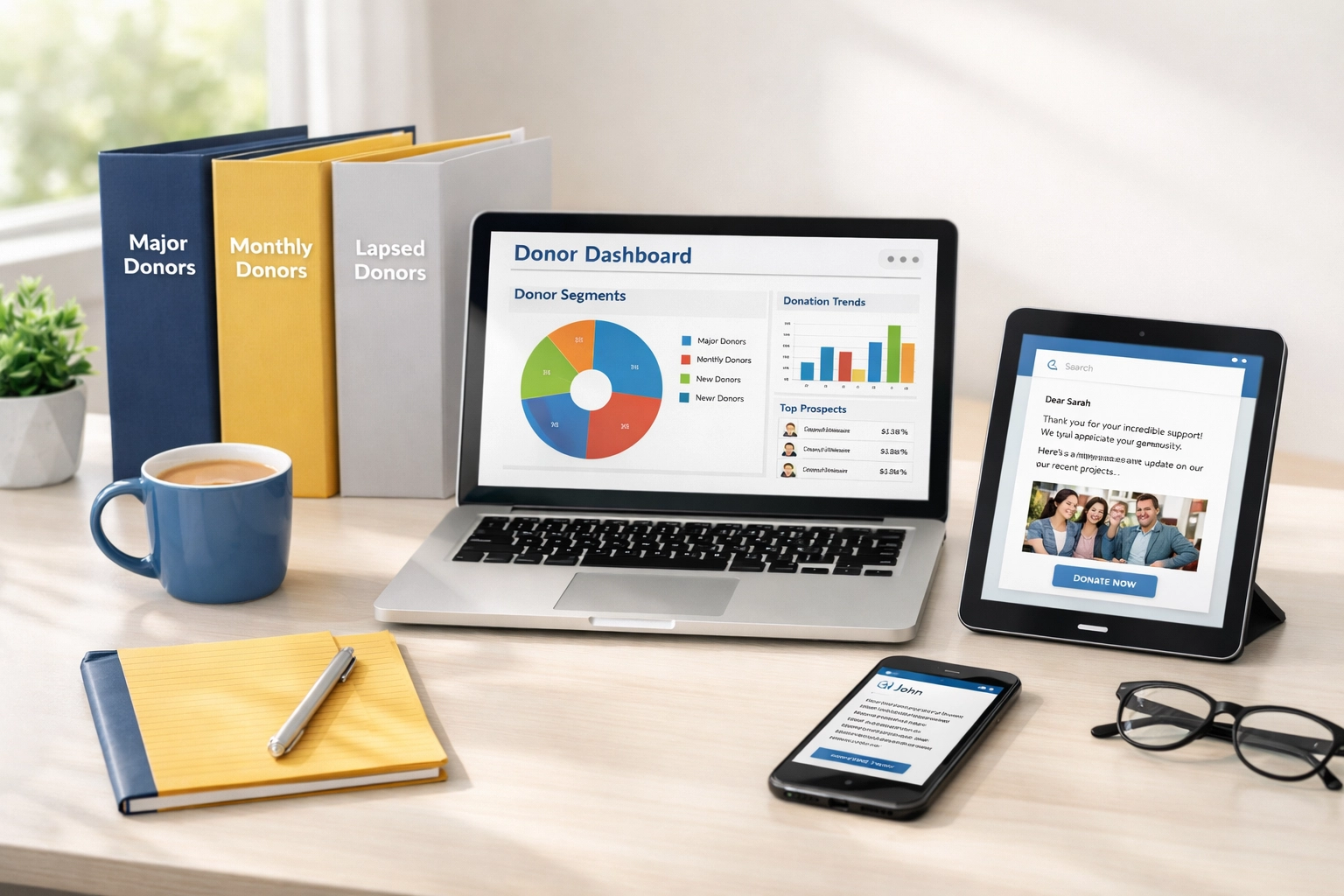
Here's where the magic happens. Once you've collected responses, segment your donors into different categories based on their answers:
Hot Prospects: Donors who've already included charities in their estate plan or expressed interest in planned giving. These folks need immediate, personalized follow-up.
Warm Leads: Donors in the right age range with strong connection to your mission who haven't yet made estate plans. They need education and cultivation.
Future Prospects: Younger donors showing high engagement and values alignment. Stay connected with these folks: they're tomorrow's major donors.
Making It Happen With Modular Marketing Campaigns
Don't send the same follow-up to everyone. Create modular marketing campaigns that speak to different donor segments. Someone who's already worked with an estate planner needs different content than someone who's never thought about legacy giving.
Use AI-powered tools (like those available through Donation Accelerator) to automate personalized follow-up sequences based on survey responses. The technology exists to make this scalable, even for small teams.

The Bottom Line
Planned giving surveys aren't just about collecting data: they're about starting conversations that lead to transformational gifts. The donors who will leave you their most generous gifts are already in your database. You just need to identify them early and build relationships intentionally.
Start with a focused survey, respect your donors' time, and use the insights to create meaningful touchpoints throughout their journey. The major donor pipeline you've been struggling to build? It's been hiding in plain sight all along.
Ready to turn survey insights into actual dollars? The sooner you start asking the right questions, the sooner you'll identify your next legacy donor. And trust us( that conversation is worth having.)