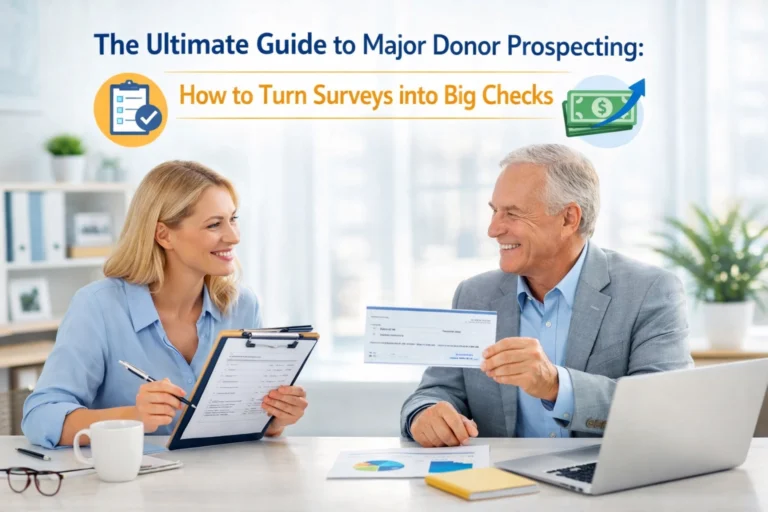
Planned Giving Survey 101: A Beginner’s Guide to Mastering Major Donor Prospecting
In the current landscape of the digital age, the implementation of data-driven strategies has become crucial for non-profit organizations seeking to establish long-term financial stability. It has been observed that traditional methods of donor solicitation, often characterized by "cold" asks and generic outreach, are increasingly being replaced by more sophisticated, insight-led approaches. Among these methodologies, the planned giving survey has emerged as a fundamental instrument for uncovering major gift potential and fostering deep donor relationships. By utilizing donor engagement surveys, organizations are empowered to identify high-value prospects without the inefficiencies associated with unguided prospecting.
The Strategic Imperative of Planned Giving Surveys
The utilization of planned giving surveys is not merely a data collection exercise but is a strategic necessity for organizations aiming to unlock new opportunities within their existing donor base. It has been recognized that a significant portion of major donor potential remains hidden due to a lack of structured engagement and information gathering. By establishing a systematic survey process, non-profits can gather critical insights into donor capacity, loyalty, and motivation.
When a survey is properly implemented, it serves as a bridge between a donor’s philanthropic aspirations and the organization’s long-term objectives. The information garnered through these digital channels can be leveraged to categorize donors into high-potential segments, thereby ensuring that resources are allocated to the most promising leads. This proactive approach to donor relationship management has become essential for organizations that wish to increase their overall impact and secure their financial future through planned gifts.

Implementing a Data-Driven Survey Framework
For a planned giving survey to be utilized effectively, it must be structured with precision and a clear understanding of the desired outcomes. Broad, declarative statements about an organization's mission should be supported by targeted questions that probe for specific donor indicators. It has been suggested by industry experts that surveys should remain concise, typically consisting of eight to twelve questions, to maximize completion rates while maintaining the quality of the data collected.
The focus of these questions should ideally cover four primary domains: capacity, propensity, motivation, and awareness. Capacity questions are designed to gauge the financial ability of a donor to make a significant commitment, often involving demographic markers and future gift considerations. Propensity, on the other hand, is measured through loyalty indicators, such as the frequency and longevity of previous contributions. By evaluating these factors in tandem, organizations can establish a loyalty score that uncovers "hidden gems" within their donor lists. Furthermore, understanding the motivations behind a donor's support allows for the development of personalized outreach strategies that resonate on a deeper level.
Maximizing Donor Prospecting through Advanced Segmentation
Once the data has been collected, the process of segmentation can be utilized to refine the list of major gift prospects. It is considered a best practice to avoid a monolithic approach to donor communication. Instead, organizations should categorize their respondents into distinct tiers based on their survey responses and historical giving patterns. For instance, donors who have already included the organization in their estate plans should be prioritized for immediate stewardship and recognition through specialized legacy societies.
High-frequency and recent donors, particularly those who have maintained active support for over five years, represent a prime segment for planned giving cultivation. By leveraging advanced analytics and AI-driven fundraising optimization, non-profits can automate the identification of these high-value opportunities. This systematic categorization ensures that the transition from survey respondent to major gift prospect is handled with the appropriate level of sophistication and professional care.

Utilizing AI for Automated Donor Engagement
In the modern fundraising environment, the integration of artificial intelligence and automation has become a transformative force. The challenges of limited staff and inefficient engagement systems can be mitigated through the deployment of virtual voice assistance and automated fundraiser chatbots. These technologies allow organizations to maintain consistent, personalized engagement with a broad donor base without incurring the high costs of manual labor.
For example, virtual call assistants can be leveraged to conduct follow-up conversations with survey respondents, clarifying their intentions and providing additional information about planned giving options. Similarly, automated text messaging and email sequences can be utilized to provide ongoing impact reports and educational resources to prospective legacy donors. By implementing these scalable, modular platforms, non-profits can create a continuous cycle of engagement that moves donors toward a major financial commitment. This use of technology is particularly effective for organizations with large donor lists, as it ensures that no opportunity is overlooked due to administrative constraints.

Transitioning from Survey Insights to High-Value Gift Solicitation
The ultimate goal of the planned giving survey is to eliminate the need for "cold" asks and replace them with warm, data-informed solicitations. When a donor has expressed interest in a specific program or has indicated a willingness to consider a legacy gift, the subsequent outreach can be tailored to these preferences. This level of personalization is crucial for establishing the trust required for major gift discussions.
The insights gathered from surveys should be integrated into a comprehensive donor relationship manager software, where they can be accessed by leadership teams and fundraising managers. By documenting every interaction and preference, an organization can ensure that its solicitation efforts are both timely and relevant. It has been proven that when donors feel their values are understood and their contributions are valued, they are significantly more likely to commit to long-term financial support. This process of converting data into actionable intelligence is a cornerstone of successful fundraising in the contemporary era.

Conclusion: Establishing a Sustainable Pipeline
In conclusion, the implementation of planned giving surveys represents a powerful strategy for non-profit organizations seeking to enhance their major donor prospecting efforts. Through the systematic collection and analysis of donor data, the risks associated with unguided solicitation are minimized, and the potential for significant financial impact is maximized. The integration of advanced technologies, such as AI-powered virtual assistants and automated engagement platforms, further enhances the scalability and efficiency of these programs.
By adopting an optimistic and forward-looking approach, organizations can unlock new opportunities and ensure their growth and success for years to come. The transition from traditional fundraising to a data-led, technology-enhanced model has become imperative for any non-profit that wishes to secure its legacy and increase its overall impact on the community. Through the strategic use of surveys and the subsequent cultivation of donor relationships, the path to long-term financial stability is clearly established.