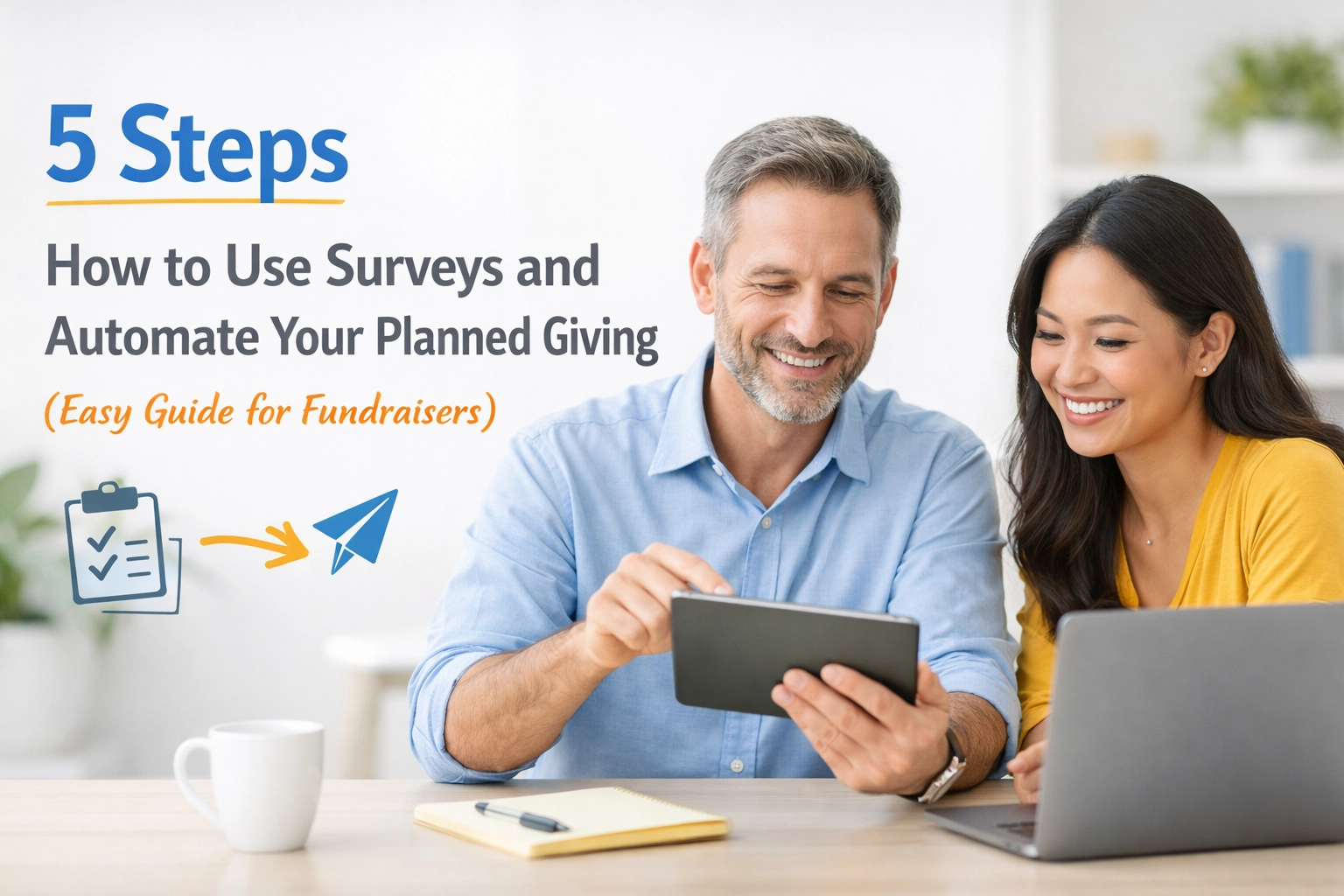
5 Steps How to Use Surveys and Automate Your Planned Giving (Easy Guide for Fundraisers)
Let’s be honest: planned giving can feel a little bit like the "final frontier" of fundraising. It’s often seen as mysterious, highly technical, and, let’s face it, a bit awkward to talk about. After all, you’re essentially asking donors to think about their legacy after they’re gone.
But here’s the secret: planned giving is the single most transformative way to secure the future of your nonprofit. And it doesn’t have to involve endless manual spreadsheets or uncomfortable cold calls. By using smart surveys and clever automation, you can identify your most loyal supporters and guide them toward a legacy gift without breaking a sweat.
At Donation Accelerator, we’re all about making high-level fundraising accessible. Whether you're a one-person shop or a massive foundation, these five steps will help you build a "set it and forget it" system that grows your pipeline while you sleep.
Why Surveys Are Your Secret Weapon
Most fundraisers wait until a donor is "old enough" to talk about planned giving. The problem? By then, they might have already made their plans.
Surveys allow you to identify potential legacy donors early by focusing on affinity, how much they love your cause, rather than just their age or bank balance. A well-placed survey is a low-pressure way for a donor to raise their hand and say, "Yes, I care about this enough to keep it going forever."
For more on what happens after the initial "yes," check out our guide on how to turn a 'maybe' into a major gift.
Step 1: Define Your Objectives and Design Your Questions
Before you start typing away, you need to know what you’re trying to dig up. Are you looking for donors who have already put you in their will (and just haven't told you), or are you looking for people who are open to the idea?
What to Ask
Your questions should be a mix of the practical and the emotional.
- The "Intent" Question: "Have you ever considered including a gift to [Organization Name] in your will or estate plan?"
- The "Why" Question: "When did you first become involved with us, and what keeps you inspired?"
- The "Legacy" Question: "What kind of impact do you want to leave on the world?"
Pro Tip: Keep it simple. Use a mix of multiple-choice questions (easy to answer) and one or two open-ended questions (great for gathering testimonials). When donors explain why they give, they are reinforcing their own commitment to your mission.

Step 2: Choose a Platform with Automation and Conditional Logic
You don’t want a boring, static form. You want a survey that feels like a conversation. This is where conditional logic comes in.
Conditional logic (or "skip logic") means the survey changes based on what the donor answers.
- If a donor clicks "I’ve already included you in my will," the next question should be, "We’d love to welcome you to our Legacy Society! May we send you a welcome kit?"
- If they click "I’m not sure, I need more info," the next question should be, "What topics are you most interested in? (e.g., tax benefits, gift annuities, or simple bequests)."
Using a platform that integrates with your CRM is crucial. You want these answers to flow directly into your donor profiles so you aren’t manually copying and pasting data. This is a core part of modern digital fundraising strategies.
Step 3: Set Up Automated Triggers and Distribution
Now for the fun part: making it run on autopilot. You shouldn’t have to remember to send the survey. Instead, use automated triggers to send it at the moments when donor engagement is highest.
Strategic Touchpoints
- The Anniversary Trigger: Send a survey on the donor’s 5th or 10th "giving anniversary." They’re already feeling proud of their long-term support, it’s the perfect time to talk about legacy.
- The "Loyalty" Trigger: Set your system to send a survey once a donor reaches a certain number of lifetime gifts (e.g., their 20th donation).
- The Post-Event Trigger: If someone attends a "Legacy 101" webinar, an automated survey should land in their inbox 24 hours later.
By automating the distribution, you ensure that every loyal donor gets the opportunity to consider a legacy gift, regardless of how busy your team is.

Step 4: Segment and Score Your Donors
Once the data starts rolling in, you’ll have a goldmine of information. But don’t treat every respondent the same way. You need to prioritize your follow-up using the CAP Model:
- Capacity: Do they have the financial ability to make a significant gift? (Use wealth screening tools for this).
- Affinity: How much do they love you? (Survey answers about "why they give" are the best indicator here).
- Propensity: How likely are they to actually do it? (Frequent, small gifts over many years are a huge "propensity" green flag).
Using AI for Scoring
At Donation Accelerator, we love using AI-powered fundraising solutions to handle this scoring. An AI can look at survey responses, giving history, and even email open rates to give each donor a "Legacy Score."
A donor who answers "Yes, I’m interested" and has been giving $25 a month for ten years is a high-priority lead! You should reach out to them personally, while a "Maybe" donor can stay in an automated email nurture sequence.
Step 5: Automate Stewardship and Track Commitments
The biggest mistake fundraisers make is "closing the deal" and then disappearing. Planned giving is about the long haul. A donor might notify you of a bequest today, but that gift might not realize for 20 years.
Keep the Relationship Warm
Use automation to keep these donors feeling like part of the inner circle:
- Automated Milestone Emails: "It’s been three years since you joined our Legacy Society: thank you for your continued vision!"
- Exclusive Updates: Put legacy donors on a special "insider" email list that gets updates from the Executive Director.
- Record Everything: Ensure your CRM tracks the type of gift (bequest, IRA beneficiary, etc.) and the estimated value.
Tracking these commitments in a dashboard allows you to see the "future value" of your fundraising efforts, which is a great metric to show your board. If you want to see more about our approach to transparent reporting, you can browse our blog for more technical deep dives.

Bonus: The Modular Marketing Approach
To really supercharge your planned giving, think about modular marketing. Instead of one giant, scary "Legacy Campaign," break it into small, digestible pieces that you can swap in and out of your existing communications.
- The "P.S." Module: A simple line at the bottom of every thank-you email: "Did you know you can support our future without spending a dime today? Take our 2-minute survey to learn how."
- The "Impact Story" Module: A short story in your newsletter about a past legacy donor, followed by a link to the survey.
- The "Tax Tip" Module: A quick note during tax season about the benefits of QCDs (Qualified Charitable Distributions).
By keeping these modules ready to go, you can integrate planned giving into your daily fundraising without it feeling like a massive, separate project.
Wrapping It All Up
Securing the future of your nonprofit shouldn't feel like a chore. By using surveys, you’re not "asking for money": you’re asking your donors about their dreams and giving them a way to make those dreams permanent.
When you combine that human connection with the power of automation and AI-powered scoring, you create a system that identifies, nurtures, and thanks your legacy donors with incredible efficiency.
Ready to start building your own automated legacy pipeline? Check out our latest news and strategies at Donation Accelerator to stay ahead of the curve. Your future self (and your future mission) will thank you!