How to Scale Your Donor Calls Without Hiring More Staff (Virtual Calling Assistant Guide)
Let's be real, your donor list is growing, but your staff isn't. You know you should be making more personal calls to engage supporters, thank donors, and build deeper relationships. But between grant writing, event planning, and keeping up with emails, who has time to dial through hundreds of contacts?
Here's the good news: you don't need to hire three more people to scale your calling efforts. Virtual calling assistants (the AI-powered kind) are changing the game for nonprofits that want to connect with more donors without breaking the bank or burning out their team.
Let's walk through exactly how this works and how you can get started.
The Staff Capacity Problem Nobody Talks About
You've probably been there. Your ED suggests launching a donor calling campaign, everyone nods enthusiastically in the meeting, and then… crickets. Because who's actually going to make those 500 calls? Your development director is already juggling a dozen priorities, your program staff is underwater, and your volunteers show up when they can.
Meanwhile, your donor data sits in your CRM, full of lapsed donors who need a personal touch, mid-level prospects ready to upgrade, and new supporters waiting for a thank-you call that never comes.
This isn't a you problem, it's a capacity problem. And it's exactly what virtual calling assistants are designed to solve.

What Actually Is a Virtual Calling Assistant?
Think of it as having a dedicated calling team that works for your nonprofit without being on your payroll. These AI-powered services handle the heavy lifting of donor outreach, both making calls out to your supporters and taking calls that come in.
But here's what makes them different from the robocalls everyone hates: they're designed specifically for nonprofit relationship-building. They use conversational AI that actually sounds natural, they follow your messaging and brand voice, and they're trained on fundraising best practices.
The best part? They can handle hundreds of conversations simultaneously while your team focuses on strategy, major gifts, and the high-touch relationships that really need human attention.
Key Features That Actually Matter
Not all virtual calling services are created equal. When you're shopping around, here's what you should prioritize:
TCPA Compliance and Quality Assurance
This is non-negotiable. You need a service that follows all the calling regulations so you don't accidentally land your nonprofit in legal hot water. Look for services that understand consent requirements, maintain do-not-call lists automatically, and have quality control processes in place.
Smart CRM Integration
If you have to manually export data, forward it somewhere, and then re-enter results back into your system, you're not actually saving time. The right virtual assistant plugs directly into your existing tools, whether that's Bloomerang, DonorPerfect, Salesforce, or even Airtable. One-click sync means your data stays clean and your team stays sane.
Customizable Scripts That Sound Like You
Your organization has a unique voice. Maybe you're casual and warm, maybe you're more formal and mission-focused. Either way, your virtual calling assistant should sound like a natural extension of your team, not a generic fundraising robot. Look for services that let you customize scripts and adapt messaging to different donor segments.
Real-Time Reporting
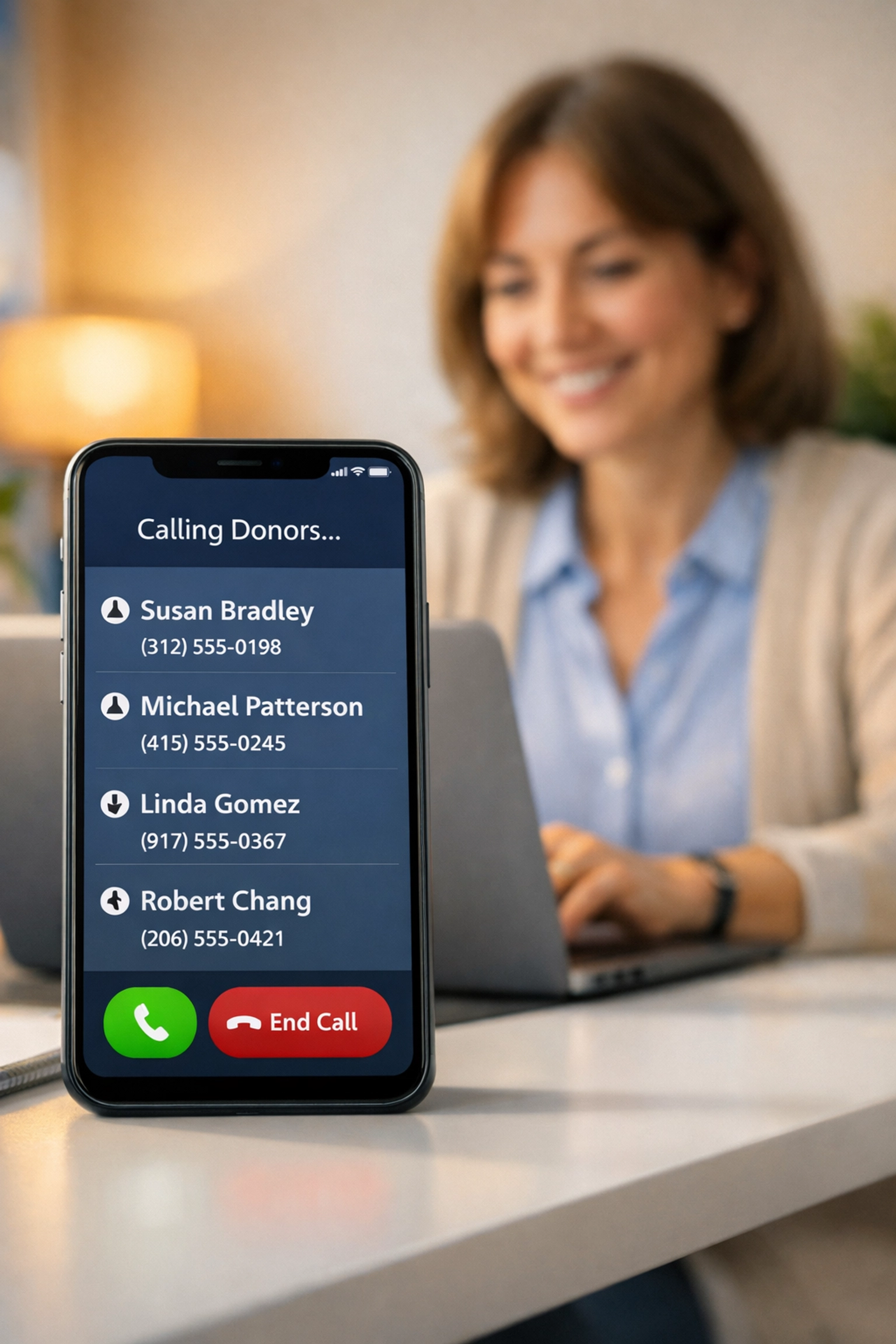
You need to know what's working. The best virtual calling services give you dashboards showing call outcomes, donor sentiment, pledge amounts, and follow-up actions needed. Some even record calls (with consent) so you can review conversations and improve your approach.
Appointment Scheduling
When a donor says, "I'd love to talk more about a major gift," your virtual assistant should be able to book that meeting directly into your development director's calendar. Automatic scheduling eliminates the back-and-forth email dance and captures donor interest while it's hot.
How to Actually Implement This (The Practical Workflow)
Ready to get started? Here's the step-by-step process that works for most nonprofits:
Step 1: Forward Your Leads
Pull a segment from your CRM, maybe it's lapsed donors from the past two years, recent event attendees who haven't donated yet, or annual fund prospects. Export this list (or use a direct integration) and send it to your virtual calling service.
Step 2: Let the Calls Happen
Your virtual assistant starts making calls based on the script you've approved. They engage donors in conversation, answer common questions, process pledges, and note any special requests or concerns. This happens in the background while your team handles other priorities.
Step 3: Review Results and Follow Up
The calling service sends back detailed results, who answered, who pledged, who needs a callback from a staff member, and who requested more information. Your team can now focus their time on the warm leads and meaningful conversations that came out of the calling campaign.
This three-step workflow lets you contact exponentially more donors than your current staff could handle alone. And because the virtual assistant handles the initial outreach and qualification, your team's time goes further.

Keeping the Personal Touch (Yes, Really)
I know what you're thinking: "But won't donors know they're talking to AI? Won't this feel cold and impersonal?"
Here's the thing: today's conversational AI has come a long way. When implemented correctly, these assistants sound natural, respond to conversational cues, and handle complex questions. But more importantly, they're not replacing your personal relationships: they're making them possible at scale.
Think about it this way: What's more personal: never getting a call at all, or receiving a warm, genuine phone conversation that thanks you for your support and asks about your interests? For most of your donor base, the virtual assistant provides the first meaningful touchpoint they've had with your organization in months.
And for donors who need deeper engagement? The virtual assistant identifies them and flags them for your personal attention. You're not replacing human connection: you're triaging so you can focus human attention where it matters most.
The Cost Reality Check
Let's talk money, because that's usually the elephant in the room when discussing new technology.
Hiring a full-time development associate costs somewhere between $45,000-$60,000 annually, plus benefits, office space, equipment, and training time. And that one person can realistically make maybe 50-80 quality donor calls per day.
Virtual calling services typically charge per call or per campaign, with costs that are a fraction of full-time headcount. You're paying for actual output: completed conversations, pledges secured, appointments booked: without the overhead of employment.
For most small to mid-size nonprofits, this means you can run comprehensive calling campaigns for less than you'd spend on a single new hire, while reaching 5-10x more donors.

Getting Started Without Overthinking It
You don't need to overhaul your entire fundraising operation to test this approach. Start small:
Month 1: Pick a low-risk segment: maybe a thank-you calling campaign for donors who gave in the past 90 days. Test the service, refine your script, and get comfortable with the workflow.
Month 2: Expand to a lapsed donor campaign. Use what you learned in month one to improve your messaging and follow-up process.
Month 3: Launch an ongoing calling program as part of your regular donor engagement strategy.
The nonprofits seeing the biggest impact aren't the ones with perfect implementation: they're the ones who started experimenting and refined their approach over time.
Your Next Move
If your nonprofit is sitting on a goldmine of donor data but doesn't have the staff capacity to actually engage those supporters, virtual calling assistants might be exactly what you need.
You're not replacing human connection: you're making it possible to connect with more humans. You're not cutting corners: you're working smarter so your small team can accomplish what larger organizations do with bigger budgets.
The donors are there. The technology is ready. The only question is: are you ready to scale your outreach without the hiring headaches?
If you want to see how this works in practice for nonprofit fundraising, check out our virtual agent call campaigns and see what's possible when you combine AI technology with genuine donor relationship building.