The Nonprofit Director's Guide to Stewardship Automation That Actually Builds Long-Term Financial Stability
Let's be real: you're juggling a million things. Between running programs, managing staff, chasing grants, and actually trying to change the world, donor stewardship often gets pushed to the bottom of the to-do list. And when you finally get to those thank-you notes? It's 10 PM, you're exhausted, and your "heartfelt" message sounds like it was written by a very polite robot.
Here's the good news: automation doesn't have to mean sacrificing authenticity. In fact, when done right, it can actually help you build stronger, more personal relationships with your donors while creating the kind of financial stability that lets you sleep at night. Let's talk about how to make that happen.
Why Your Gut Feeling About Automation Might Be Wrong
When most nonprofit leaders hear "automation," they picture those cringe-worthy mass emails that start with "Dear [FIRST_NAME]" (brackets included). But modern stewardship automation is nothing like that.
Think of automation as your behind-the-scenes assistant, the one who makes sure no donor falls through the cracks, who remembers every giving anniversary, and who ensures your donors hear from you at exactly the right moment. You're still the heart and soul of the relationship. Automation just makes sure your heart doesn't skip a beat when things get busy.

The connection to long-term financial stability? It's all about retention. Acquiring a new donor costs five to seven times more than keeping an existing one. When you automate the foundational touchpoints of stewardship, you're not just saving time, you're building a reliable revenue stream that sustains your mission year after year.
The Three Pillars of Stewardship Automation That Don't Feel Robotic
1. Thank-Yous That Actually Land (Within Minutes, Not Weeks)
Your donor just clicked "submit" on their gift. They're feeling good, motivated, connected to your cause. This is the moment, not three weeks later when you finally process your acknowledgment letters.
Set up automated thank-you emails that trigger immediately after a donation. But here's the trick: don't just say "thanks." Tell a quick story. Share a single, powerful statistic about your impact. Make them feel something about what they just did.
For example: "Your $50 just provided three weeks of tutoring for a student like Maria, who went from reading at a 2nd-grade level to conquering 5th-grade books in six months. That's the power of what you just did."
See the difference? It's automated, but it's not generic. And for your major donors, set up alerts that ping your development director or board member instantly, so someone can make a personal call within 24 hours. That's the hybrid approach that works.
2. Impact Reports That Show (Not Just Tell)
Here's where automation really shines. Instead of waiting until your annual report to share impact, create automated quarterly or monthly reports that show donors exactly what their specific contribution accomplished.
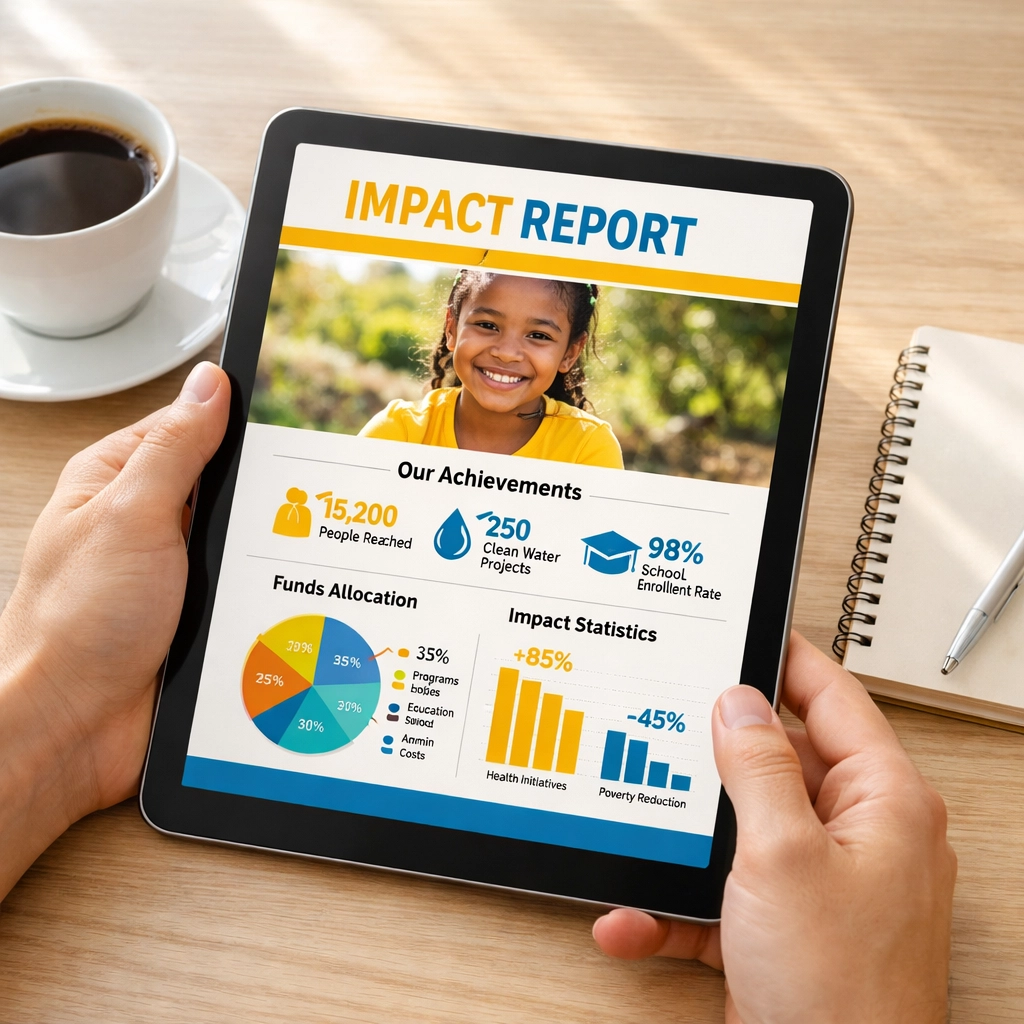
Segment your donors based on giving level and program interests. Someone who gave to your education program shouldn't receive the same impact report as someone who supported your housing initiative. Automation tools can pull data from your CRM and generate personalized reports that feel like they were crafted just for each donor, because, in a way, they were.
Include photos, quotes from beneficiaries, and specific numbers tied to their gift range. "Donors who gave $100-$500 this quarter helped us serve 847 meals, provide 23 families with emergency rental assistance, and connect 15 people with job training programs." It's transparent, it's specific, and it reinforces why they should give again.
3. Smart Segmentation That Treats Donors Like People
Not all donors are the same, so why would you communicate with them the same way? Automation allows you to create dynamic donor journeys based on actual behavior and preferences.
Run an automated welcome survey when someone makes their first gift. Ask them: Why did you choose to support us? How do you prefer to stay in touch? What impact stories matter most to you? Then use that information to route them into the right communication track.
A monthly donor should receive different touchpoints than someone who makes an annual gift. A volunteer who also donates needs different stewardship than a donor who's never set foot in your building. Automation makes this level of personalization possible without needing a staff of 50.
The Financial Stability Secret Nobody Talks About
Here's something that might surprise you: the best stewardship automation isn't just about donor communications. It's also about automating your financial operations in ways that build donor confidence.

Donors want to know their money is being used wisely. When you automate financial reporting, reconciliation, and audit trails, you're not just making your accountant happier, you're creating the transparency that keeps donors giving year after year.
Cloud-based accounting automation can cut your financial close time by up to 90%, giving you faster insights and cleaner data to share with donors. Digital approval workflows replace those paper check request forms that sit on someone's desk for weeks. Everything becomes visible, trackable, and audit-ready.
This matters because 72% of nonprofit finance leaders now prioritize automating financial reporting, they recognize it's not just about internal efficiency, it's about stewardship. When you can quickly generate fund-specific reports or show exactly how restricted gifts were used, you're building the trust that leads to bigger gifts and longer retention.
Keeping the "You" in Your Communications
The biggest fear nonprofit leaders have about automation is sounding like, well, an automated response. Here's how to avoid that:
Use conditional logic to get personal. If someone's been giving for five years, your automated email should acknowledge that. "You've been part of our community since 2021, and we're so grateful" hits differently than a generic thank-you.
Write like you talk. Read your automated messages out loud. If you wouldn't say it in person, rewrite it. Contractions are your friend. Humor is okay. Warmth beats formality every time.
Mix automation with high-touch moments. Use automation for the baseline: the thank-yous, the quarterly updates, the birthday wishes. But reserve handwritten notes, personal phone calls, and video messages for major donors and milestone moments. Let automation handle the consistency so you have time for the extraordinary touches.
Test with real donors. Before you launch any automated campaign, send it to a few trusted supporters and ask: "Does this feel like it came from us?" Their feedback will keep you honest.

Your Implementation Game Plan
Starting feels overwhelming, but it doesn't have to be. Begin with one automated workflow: most organizations start with thank-you emails because the ROI is immediate and obvious.
Track everything in your CRM. If you're not measuring open rates, click-through rates, and donor retention by communication type, you're flying blind. Use that data to refine your approach over time.
Choose tools that scale with you. Look for pricing models based on activity rather than total supporter count: you shouldn't be penalized for growing your donor base.
And remember: automation is iterative. Your first automated email sequence won't be perfect. That's okay. Launch it, learn from it, improve it. The goal isn't perfection; it's consistency and personalization at a scale that would be impossible manually.
The Bottom Line
Stewardship automation isn't about replacing the human touch: it's about amplifying it. It's about making sure every donor feels valued, informed, and connected to your impact, even when your team is stretched thin.
When you automate the foundational elements of donor stewardship while reserving your personal energy for high-impact moments, you create a sustainable system that grows with you. More importantly, you build the consistent, transparent, authentic relationships that translate into long-term financial stability.
Your donors don't want perfection. They want to know they matter, that their gifts are making a difference, and that you're being a good steward of their trust. Automation, done right, helps you deliver on all three: without burning out your team or sounding like a robot.
Ready to explore how technology can support your stewardship strategy? Check out our approach to donor relationship management that keeps the human at the center.